

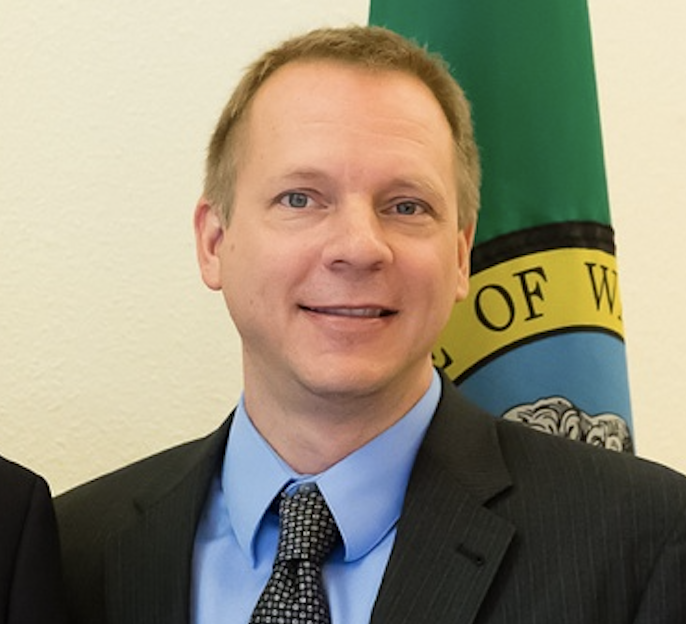
Scott Bellman
DO-IT, University of Washington
Most of the critical things I’ve learned about mentoring youth with disabilities I learned from interactions with mentees! It is a great honor to serve as a mentor, which requires intentional and thoughtful listening, as well as an open mind.
Scott (he/him) has mentored hundreds of youth and young professionals with disabilities over 24 years through the University of Washington Disabilities, Opportunities, Internetworking, and Technology (DO-IT) Center. As Center Director, he believes in strengths-based mentoring, and helps students understand that their voices should be at the center of conversations about their education and careers. Scott worked with students as co-editor of the book “Perspectives of STEM Students with Disabilities” and has worked with students to develop several advocacy videos and publications. Scott has authored articles in journals sharing effective mentoring strategies such as:
- Neuroscience for Neurodiverse Learners: Lessons Learned about Engaging All Students. Review of Disability Studies
- Parents Can Play a Critical Role for Neurodivergent Students Transitioning to College. MindBrainEd Journal.
- Work-based learning experiences help students with disabilities transition to careers. WORK: A Journal of Prevention, Assessment, and Rehabilitation.
- Academic coaching outcomes for students with disabilities pursuing (STEM). Journal of Postsecondary Education and Disability
Scott has been a project director and Principal Investigator of an NSF-funded project called Neuroscience for Neurodiverse Learners. He has been very active in this multi-year college-preparation project, mentoring students with disabilities and directing campus-based programming supporting students with academic challenges related to conditions such as dyspraxia, dyslexia, attention deficit hyperactivity disorder, dyscalculia, autism spectrum disorder, and Tourette syndrome.
Scott served as the leader of the West Coast Hub of the Alliance of Students with Disabilities for Inclusion, Networking, and Transition Opportunities in STEM. Scott provided mentoring to students in the Alliance and helped provide recommendations to mentoring programs for students with disabilities at six institutions of higher education on the west coast.
From 2003 to 2015, Scott managed the UW activities of the United States Department of Labor’s Workforce Recruitment Program, mentoring over 150 students with disabilities as they prepared their resume, conducted practice interviews, and ultimately engaged with a WRP recruiter for jobs in the Federal Government and in the private sector.
Scott has authored and co-authored a large number of articles that share information specifically about mentoring youth with disabilities. Examples from magazines, newsletters, blogs, and organization websites include:
- Increasing Diversity in STEM: CNT Students Encourage Neurodivergent High Schoolers to Explore Neuroscience. Center for Neurotechnology.
- Student voices: Improving Accessibility in STEM Classes. The Hub: Keeping the Association of Higher Education and Disability Connected.
- Tools for Educators: Supporting engineering students with disabilities. 2018 American Society for Engineering Education conference, featured resource.
- Student voices: Insights about accessible science and engineering from disabled students. The Hub: Keeping the Association of Higher Education and Disability Connected.
- Mentors matter: Youth with disabilities and the pursuit of STEM. DO-IT
- The use of mentoring to recruit employees with disabilities. Hire Disability Solutions Monthly
Scott has presented information about mentoring and supporting students with disabilities at over 50 professional conferences and workshops, reaching thousands of students, educators, employers, and other allies as they embark on their own journeys of mentoring and inclusion. He served in leadership roles at the Washington State Governor’s Committee on Disability Issues and Employment for over a decade.